FOE 2/6 Reflection

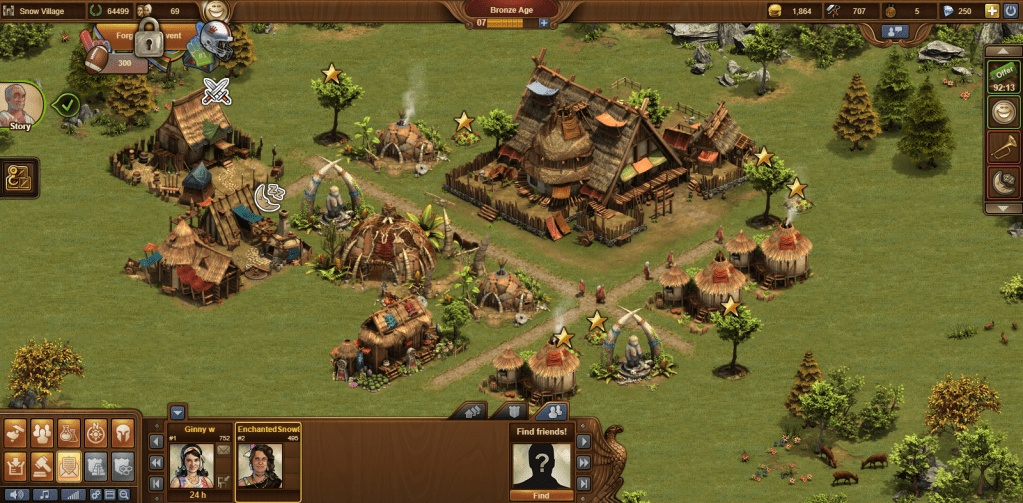
I tried to attack to conquer some land, but lost again like earlier this week. I returned to my city and researched the wheel and construction. I bought my first forge point in order to do so. I then used 50 gems to train a 5th spear fighter. I did some more quests as well.

Your civilization in Forge Of Empires goes through historical ages. I am still in the Bronze Age, but I know someone who has moved onto the iron age. The bronze age consists of starting out your city from the basics – food, supplies, an army.

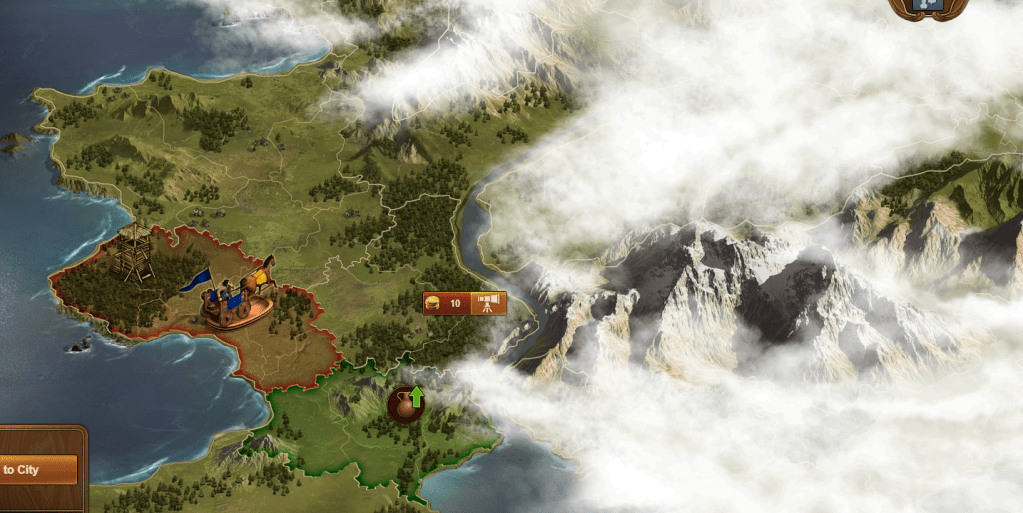
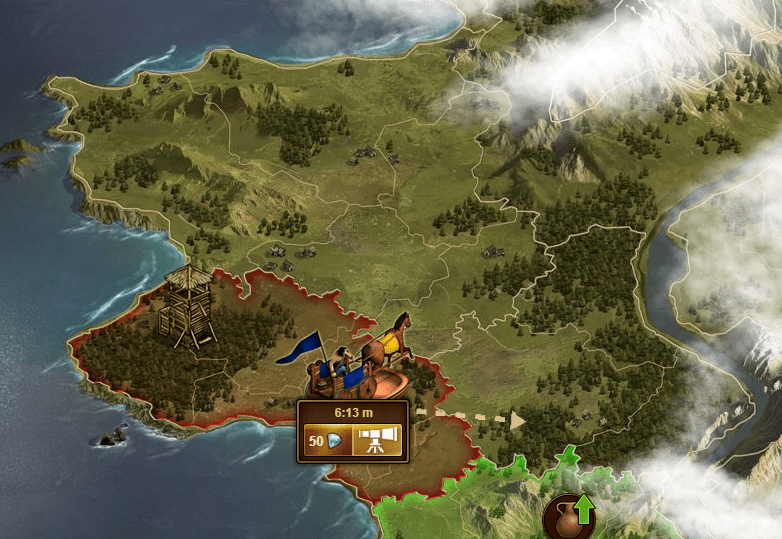
The continent map is simple. It has regions split up by white lines. Green regions are what you have conquered and red regions are what you can conquer next. It is interesting that the majority of the map is covered in white fog. I am not sure what the purpose of that is yet. The map is easy to navigate and looks pretty realistic.
Continent Map
Scouting A New Area

FOE 2/4 Reflection

I have continued trying to acquire land and have faced my first defeat in battle. I lose all four of my soldiers in the battle so I had to go back to my city and train more soldiers. I am going to try negotiating instead of battling next time I go to those areas. To negotiate, I need to build some tools.

I would redesign the game so that it connected to curriculum more. For example, if I wanted it to connect to 6th grade world history, I would make the “worlds” in the game different parts of the world where civilizations began. In the different areas, there would be features specific to that region and showcase the specific food, art, tools, fighting skills, etc. that they had. I think this would make for a better and more specific educational game.

So far I have only interacted with the game’s coins and diamonds. I have not had an issue with running out of either. I think it is interesting that they have diamonds, which can be paid for, in the game. I think the ability to buy diamonds takes away from the patience one needs to build a civilization and tempts people to spend real money on the game. I just learned that supplies can be used to negotiate with other areas on the map. This is interesting because it shows that value is placed on commodities too, not just coins/money.

2/4 Reflection

The Giroux article focuses on the consumer culture in America. It points out that kids are dramatically increasing the amount of media they consume daily – ranging from traditional TV to online games. The article talks about the methods corporations such as Disney use to make their media and advertisements specifically targeted to kids, and how this can be harmful because it is not based on research. It also goes over how many Disney online products are consumption based – they encourage kids to buy products from them. The author ends by stating that these corporations play a big role in how youth today grow and understand the world, and that we as a society should be aware of the big role they play. Sherry Turkle’s Ted Talk makes the point that people have increasingly started using technology and sacrifice personal connection because of it. An important argument she makes is that when we use technology to communicate, instead of actual conversations, is that we can edit how we present ourselves. She also argues that technology brings people comfort because it encourages constantly connecting to the world, but this is detrimental because it leaves people with the inability to be alone and to be with themselves. She concludes that people need to begin using technology to lead us back to real life and to benefit us rather than isolate us from society. In Danah Boyd’s speech she talks about how teens and young adults feel that they need privacy on social media and on the internet, even though the information is technically public. Some of the ways the teens she talks about tried to maintain privacy online is playing with privacy settings, deleting old comments/posts, The Patriot Act episode’s main points are related to the gaming industry’s labor practices. The first issue he brings up is that gaming companies usually force their workers to work over time or “crunch” in order to meet their deadlines which has effects on their mental and physical health. These workers do not get paid for their extra work usually and are treated as replaceable; many are fired after games are released or if they complain about their treatment. Another point Hasan brings up is that women are discriminated in many gaming companies; most of them face workplace harassment and are not respected by their male counterparts. He finishes off by discussing the benefits the gaming (and tech) industry can gain by unionizing.and “encoding” what they say. She also delves into we have to consider the youth perspective on privacy and surveillance from their parents, corporations, etc.

Reading the first article was very shocking to me; it made me disillusioned about Disney and their advertising methods. It was interesting to think about some of the tactics that me and my brother fell for growing up. I specifically remember both of us convincing my dad to let us get Club Penguin memberships because the perks were so enticing. Sherry Turkle’s ted talk also resonated with me because I notice how even when I’m hanging out with my friends, there is always times when they are simultaneously texting or going through social media instead of being 100% in the moment. I sometimes catch myself doing this too. I think this is an issue because it disconnects people from reality.

Question for the class: Do you think the pros of technology (in relation to connectedness) outweigh the cons?

1/30 FoE Reflection

I finished conquering the province Dunarsun. I also added some friends and earned coins by aiding them. My city is starting to run out of room, so I need to expand it soon! I tried to complete my newest quest which was to buy a forge point, but the button to buy forge points was not working on my iPad. I had this issue before where a button wouldn’t work when I played the game on a computer, so it seems like there is some glitches in it.

I think the educational possibilities in the game include building critical thinking skills and learning what is needed to maintain a city. I think this game can be incorporated into history classes when talking about how civilizations are built.

The game on my laptop and iPad are pretty similar, but I would say the iPad game is easier to play simple because of the touchscreen facility. The main difference between them is the tabs on the bottom of the screen. On the iPad, you can only see the build, research and map tab at first. To see the rest, I have to press an arrow to open them up. The friends tab is also condensed in this way; I have to press an arrow to open it up. Personally, I prefer this because it makes the screen less busy and is less distracting.

Forge Of Empires: Avatars and Graphic User Interface

This time when I played Forge Of Empires, I build more decorations and houses in my city. I also trained more spear fighters to make my army stronger. I researched pottery and then build a pottery for my city to move it forward.

The majority of the character options are white males, with a good amount of white women, and very little people of color. All the characters have very different styles and are distinct. The low amount of characters of color was disappointing, because as a women of color I could only find one character who looked like me. I chose her, even though I didn’t necessarily relate to her fashion sense, simply because I wanted to play as someone who looked like me. It is interesting to notice that if I was white, I could probably choose a character who looked like me and who had a similar sense of style as me.

The GUI of the game has been pretty to use so far. The build, research, map, and arm management tabs are easy to identify. Within the build tab, it is easy to identify the different options using the pictures as well. The only issue I had was figuring out how to move buildings after I built them. To do so, you have to click on the build tab and then a menu pops up on the top of the screen with sell and move options. I think it would be easier if these options were shown when you just clicked on the building.

1/28 Reflection

The “Critical Media Literacy is Not an Options” article’s main point is that education cannot ignore the other ways in which information is provided in the 21st century besides print. The author proposes the idea of critical media literacy which explores how social groups are represented in media, includes various media sources, and allowing students to engage with media. Engagement includes analyzing the social and political contexts of the media, sharing opinions about it, and collaborating. The “Teaching Social Studies With Video Games” article states that using video games in the classroom can lead to students applying concepts they learned in class and critical thinking in relation to the material. It also talks about the lack of resources for teachers who want to implement video games into their classrooms as it is still a controversial and new idea. “Political Internet Games – Engaging an Audience” discusses the three reasons game developers make political games: to inform, persuade and encourage players to take action. About half the players in the study said that they would talk about the issues presented in these games to their friends or encourage their friends to play these games. This shows that the games were effectively encouraging action and increasing awareness of social issues. The “Creating Critical Play” article goes over a game in NYC called SOBA where players had to interact with community members and non-tourist areas which led them to have a better understanding of the communities in NYC. The article points out that games can be an avenue to learn and discuss more about social issues.

What stuck out to me about the first article was when they discuss a UCLA course where the professor had her students make websites or videos related to topics they thought were misrepresented (or not represented) in typical media sources. I have never done a project like this, but I wish I had because it seems like it would lead to critical engagement with media sources and a better understanding of the world. I liked that what the students learned from the project was directly applicable to the real world. The last article “Creating Critical Play” was interesting to me because it talked about how games are a way for people to place themselves in other people’s shoes and how this builds an understanding of different perspectives. Although I have never used games in this way in schools, my high school English teachers used this approach in the books they chose to teach. Because of this teaching approach, I have a better understanding of many social issues. It would be really interesting to use games in this way.

My question for the class is: Have you ever interacted with media that has inspired you to learn more about a social issue?

Forge of Empires Setup Reflection

Username: EnchantedSnow8

City Name: Snow Village

World: us1

As I began setting up my Forge of Empires city, the game had me set up huts/houses for my residents, add decorations to my city, research various techniques to improve my resident’s quality of life and train fighters to acquire other areas in the world. The experience was interesting and instantly engaging.

1/23 Reflection

“Awakening Teachers Capacities for Social Justice With In Arts Based Inquiries” is based around the idea that teachers play an important role in student development so they have a responsibility to understand social justice related issues. This paper explores how using art empowers student to understand and speak out about social issues related to race, class, gender, etc. During this study, students were able to check their own biases and began to understand the daily issues different groups of people face. The graphic novel “In Real Life” is about the discrimination of female video game players and the labor policies in certain areas. It explores the long hours and lack of healthcare that young workers faced in China. The author’s purpose was to spread awareness for these labor practices and teach readers that its important to be aware of these issues even if they don’t directly affect us.

As someone who pursues art in my free time, the article from today’s readings really resonated with me. I use art to gain a better understanding of myself, my feelings, and my culture. Because of this personal experience, I know that students can benefit from doing more art in school settings. Art can guide students to creatively and critically think about various issues in their person lives and in the world. I also agree with the article that teachers have a responsibility to understand the social issues that affect their students because I think that without understanding these issues teachers cannot build connections with their students. The graphic novel was eye-opening because I have never read about labor practices in a fictional story. Even though it was fiction, it somehow felt more personal as I was reading. I think that more graphic novels like this, with messages about social issues, should be read in schools.

My question for the class is: Do you think teachers have a responsibility to educate themselves on social issues, or is that beyond the scope of their job?

1/21 Reflection

The Arthur Interactive Media Study paper focuses on research conducted on the effects on students’ character development that an interactive program had. The results showed that teachers found the program to be well-made and engaging. The program led to students of multiple ages having meaningful conversations about humility and forgiveness which is exactly what the program aimed to do. The study concludes that these types of programs will have an impact on student behavior and relationships. The Welcome to AIM video highlights that this program is teacher and research approved. It also emphasizes that AIM helps students with social and emotional learning. The Arthur interactive media project, the Arthur graphic novel, poses thought provoking questions about how the characters feel which leads to students having a better understanding of the feelings. It was easy to use and was a good combination of engaging and educational. The NPR podcast talks about how Dora as a latinx icon helped reduce xenophobia and increased inclusivity of latinx people in media.

It was very interested to learn about the AIM project because when I was in school (specifically elementary school) there was not that much focus on social and emotional learning. I do not remember doing activities like this where I got to learn about certain feelings and behaviors and how to react to them. I think this is really important for kids to learn and I am glad that schools are starting to integrate it. I grew up watching Dora as a kid and have never realized that she was an icon and revolutionized media for people of color. As someone who is a strong advocate for representation in media of different culture, genders, and social groups, it was inspiring to read the journey that the makers of Dora went through. Even though I did not realize it before, I am sure Dora has played a big role in how society views immigrants and bilingual people.

My question for the class is: What are some other projects/lessons that you know of that foster social and emotional learning?

1/14 Lab: Comics Examples

  1. What are the differences between each of the sites? Some of the sites, such as Wormworld Saga and Better Call Saul, mainly focus on the comics on their website, as in they don’t have too much other content. The XKCD website is also solely focused on the comics, but it’s more simple and has a more casual vibe then the other two. On the other hand the Girls With Slingshots’s website has more of a focus on promotions (for their etsy store and patreon) and learning about the author. The last two comics, The Norm Comics and The First Night, don’t have websites and are just on Youtube.
  2. Place yourself in each artist’s seat and consider the different choices they made while creating the comic. Write down the decisions you think they made during the creative process. I think the Wormworld Sage author made the creative decision to draw the characters to look more realistic rather than animated, so that it feels like the comic is about a real person; This author also added a lot of shadows and darkness to the illustrations which make me feel as if the main character feels a sense of sadness throughout the comic. The Norm Comics author chose a simple color scheme which makes the comic appear very normal and as if we are looking at someone’s day to day life. The First Night author chose to actually animate the comic which makes it more engaging to watch, especially since it is in video form. The Better Call Saul author chose to make the illustrations very exaggerated and similar to other superhero comics such as the marvel ones; I think this conveys the bravado and outside of the real world feel of typical superhero stories. The XKCD comics author chose to use simple drawings without color to convey the simplicity of the comics. The Girls With Slingshots author also made her illustrations and color scheme simple which makes the comic feel normal and relatable in its normalcy.
  3. Who do you think the intended audience is? Elaborate on why? I think most of the comics have a general audience of young adults and adults because their content seems to be related to thing adults go through daily. I think the Workwork Sage is specifically targeting kids who feel like they don’t fit into typical norms (related to academics) because it shows the main character being judged by his teachers and father. I think the XKCD comics are meant more typically “nerdy” people, as in people who are into dissecting society.
  4. Would you change anything? If so, what? If not, why not? I enjoyed the majority of the comics in the forms they came in and wouldn’t change them, because of their easy access and the variety of illustration styles. I would make the The Norm Comics into slides on a website rather than a video, because for me personally the video was going too slow so it reduced my engagement. I would also make the Girls With Slingshots website more related to the comics, because when I first went on it I didn’t understand how to see all the past comics and was bombarded by all the other information on the site.
  5. What resources do you think were needed to make this comic experience? To make these comics, one would need most importantly need the writing and drawing skill to convey their meaning. They would also need something to draw the comics on (ranging from paper/pencil to a digital art program). Lastly, they’d need somewhere to put their comics (a platform like Youtube or building their own website).
  6. You will notice that some links send you to the first comic in the series, others send you to a playlist, and some land you at the most current comic strip? Do you have a preference and why? I liked the ones that took me to the first comic in the series, because I feel like most of the comics are interconnected so starting from the beginning is the best way to read them. For example, Girls With Slingshots started with the latest comic so for a first time reader like me, it was out of context.
  7. Does the site use the medium (internet browser) effectively? I think all the sites used the internet browser effectively because they were easy to navigate and it was easy to move through the comics.
Design a site like this with WordPress.com
Get started